
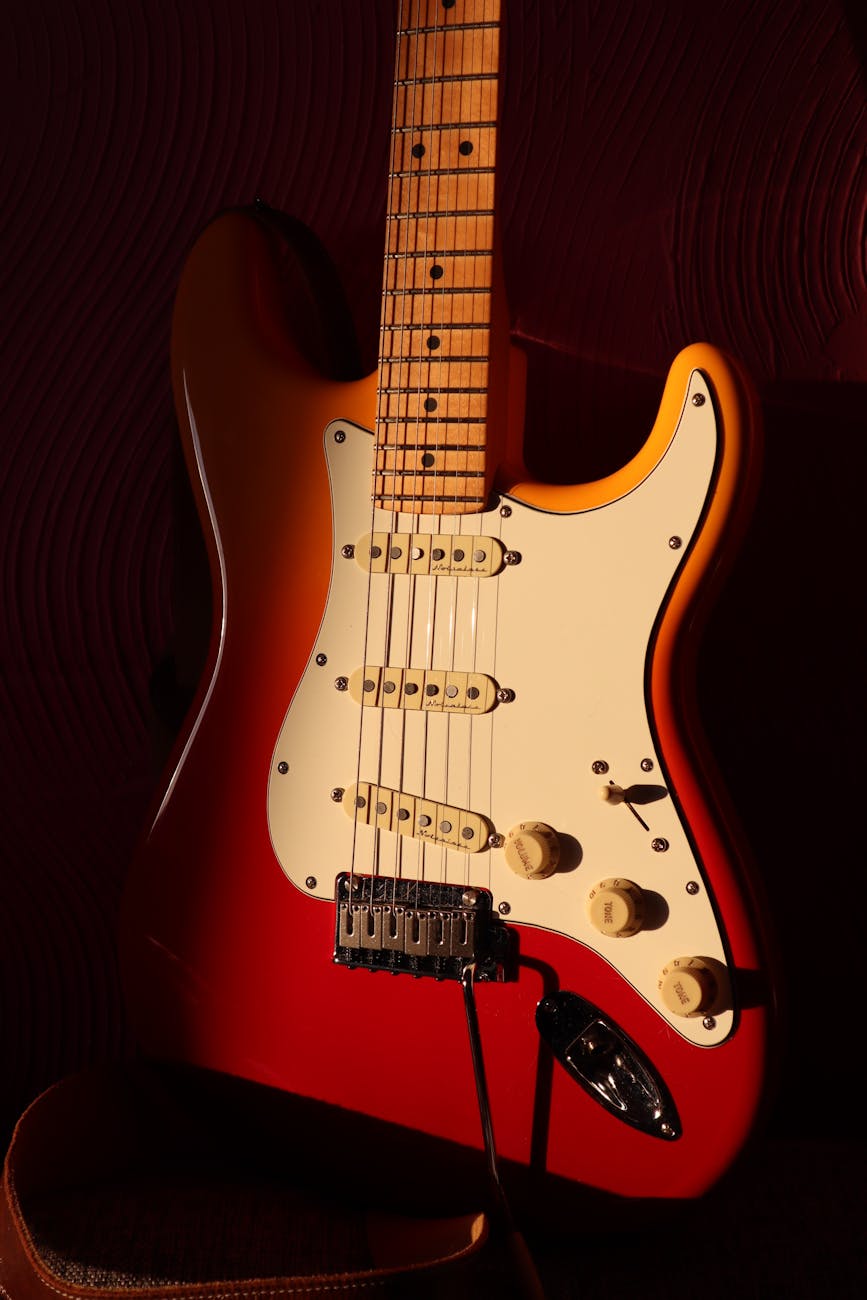
Quick answer: Gospel guitar chord voicings are different ways of arranging the notes of a chord, using extensions, inversions, slash chords, and close or spread positions. They give gospel music its full sound. The fastest way to improve is to take chords you already know, learn several voicings of each, and practice them through common progressions in all twelve keys.
If you’ve been searching for gospel guitar chord voicings that actually sound authentic in a real church or worship setting, the key isn’t just learning more chords. It’s understanding how to use the ones you already know.
Gospel guitar chord voicings are the specific shapes and note arrangements used to play a chord across the fretboard, arrangements that create movement, expression, and rich harmony instead of a flat, generic strum. The right voicing can transform your sound, moving you from basic playing to something that feels professional and musical.
In this guide, you’ll learn what gospel chord voicings are, why they matter, and how to start using them effectively on guitar. Key takeaways:
- A chord voicing is how a chord is arranged on the neck, not just which chord it is. The same C major can sound five different ways depending on its voicing.
- Extended tones (7ths, 9ths, 11ths, 13ths), inversions, slash chords, and spread voicings are what give gospel guitar its signature richness.
- Voicings matter for three reasons: they shape your tone, they smooth out your transitions through voice leading, and they control tension and release.
- Gospel progressions like 1-4-5, 2-5-1, and 6-2-5 rely on strong voicings to sound full and connected rather than mechanical.
- Most chord books teach static shapes in one key. Real gospel playing requires knowing voicings across all 12 keys and how to move between them.
👉 Get Gospel Guitar Chord Voicings on Amazon
What Are Gospel Guitar Chord Voicings?
Gospel guitar chord voicings refer to the specific shapes and note arrangements used to play chords across the fretboard. A voicing isn’t the chord itself, it’s the particular way that chord is built and positioned on the neck.
Unlike basic open chords or barre chords, gospel voicings often include:
- Extended tones (7ths, 9ths, 11ths, 13ths)
- Inversions and slash chords
- Upper-register shapes
- Close-position and spread voicings
A plain C major triad, for example, becomes a Cmaj9 once you add the 9th, giving it more color without changing its basic function in the progression. An inversion rearranges which note sits on the bottom: a C/E (C major with E in the bass) creates smoother movement into the next chord than a root-position C major would.
Close-position voicings pack the notes tightly together, which produces a warm, dense sound often used for pad-like comping. Spread voicings stretch the same notes across a wider range, creating a more open, orchestral sound that mimics how a gospel pianist might voice the same chord. These voicings, used together, create the full, rich sound that defines gospel music. What Is Gospel Guitar? explains the style.
👉 Watch guitar lessons on YouTube
Why Do Chord Voicings Matter in Gospel Music?
Most beginner guitarists focus on chord shapes. Advanced players focus on how chords are voiced and connected.
They shape your tone. The same chord can sound completely different depending on how it’s voiced. A root-position G major sounds grounded and plain. That same G, voiced as a 2nd inversion with a 9th added, sounds lifted and colorful, even though it’s technically still a G.
They improve transitions. Good voicings allow for smooth voice leading, meaning the individual notes inside each chord move the shortest possible distance to the next chord. That’s essential in gospel music, where progressions often move quickly and need to feel connected rather than jumpy.
They add emotional depth. Gospel music relies heavily on tension and release, and voicings control that feeling directly. A suspended or 9th chord creates tension; resolving it to a clean triad releases it. That push and pull is a big part of what makes gospel music feel emotional rather than mechanical.
They free you from one key. A guitarist who only knows one voicing per chord is stuck playing in whatever key that voicing was learned in. A player with multiple voicings for the same chord can move anywhere on the neck, which matters when a worship leader calls a song in a different key than usual. How to Play Rich Gospel Guitar Chords has more on this.
Want to see these voicings applied to real songs? Gospel Guitar Chord Voicings walks through them in all 12 keys.
👉 Get charts and practice materials on Patreon
What Are Common Gospel Chord Movements?
Gospel chord voicings are most powerful when combined with movement. Gospel musicians typically talk about progressions using scale degree numbers (the Nashville number system) rather than specific note names, since it lets the same progression get called out in any key. In the key of C, for example, 1 is C, 4 is F, and 5 is G.
You’ll often see progressions like these:
| Movement | Degrees | Typical feel |
|---|---|---|
| 1 → 4 → 5 | Home → Subdominant → Dominant | Grounded, foundational, gospel and blues roots |
| 1 → 3 → 6 | Home → Mediant → Relative minor | Reflective, a touch of longing before resolving home |
| 2 → 5 → 1 | Predominant → Dominant → Home | The classic turnaround, borrowed from jazz |
| 6 → 2 → 5 | Relative minor → Predominant → Dominant | Sets up the turnaround from further out, common in vamps |
When paired with the right voicings, these progressions sound full, dynamic, and expressive instead of like a checklist of chord changes. See Gospel Passing Chords on Guitar and Common Gospel Guitar Progressions.
Curious how these movements connect in real time? The book breaks down each progression with multiple voicing options per chord.
👉 See Gospel Guitar Chord Voicings on Amazon
What Is the Problem With Most Chord Books?
Many guitar books give you static chord diagrams, a limited set of voicing options, and no real musical context for when or why to use them. That’s why players often feel stuck even after learning dozens of chords. They can name the chord, but they can’t move through it musically.
To truly improve, you need a system that teaches how voicings connect, how to move between chords smoothly, and how to apply them in real music rather than in isolation.
👉 See these ideas demonstrated on YouTube
A Practical Gospel Guitar Chord Voicings System
This is exactly what Gospel Guitar Chord Voicings was designed to do.
👉 Get the book here: https://a.co/d/05HbQEo9
This book goes beyond basic diagrams and shows you how to actually use chord voicings in a musical way. How to Voice Gospel Triads on Guitar Clearly is a good starting point.
Inside, you’ll learn:
- How to play major, minor, dominant, and half-diminished chords across the fretboard
- Multiple voicings for every chord in all 12 keys
- How to connect chords smoothly using real gospel movement
- Upper-register voicings used in modern gospel and worship
- Practical applications you can use immediately
How Does This Book Help You Sound Better Fast?
With the right approach, chord voicings will help you sound more professional and polished, play confidently in any key, and add passing chords naturally. They’ll also improve your transitions and timing, and help you develop your own unique sound over time.
This is the difference between playing chords and making music.
👉 Join Patreon for lessons and charts
Who Is This Book For?
This book is a fit if you want to sound more authentic in gospel or worship settings, feel stuck playing basic chords, or want to expand your chord vocabulary beyond a handful of shapes. It’s also built for players who need a system that works across all 12 keys, not just the one or two they already know, and for anyone serious about improving their musicianship rather than collecting more chord diagrams.
👉 Study gospel voicings with Gospel Guitar Chord Voicings
Frequently Asked Questions
What is a chord voicing?
A chord voicing is the specific arrangement of notes used to play a chord, including which note is on the bottom, how the notes are spaced, and where on the neck they’re played. The same chord can have many different voicings.
What’s the difference between a chord shape and a chord voicing?
A chord shape usually refers to one fixed way of playing a chord, like an open G or a barre chord. A voicing is broader: it includes inversions, extensions, and spacing choices that change how that same chord sounds and functions.
Do you need to know all 12 keys to play gospel guitar?
Not to get started, but it matters long term. Worship leaders and vocalists often call songs in whatever key fits their voice, so guitarists who can only play in one or two keys get left out of that flexibility.
What is voice leading?
Voice leading is the practice of moving the individual notes within a chord the shortest possible distance to the notes of the next chord, which is what makes chord changes sound smooth and connected instead of abrupt.
What is a slash chord?
A slash chord, written like C/E, tells you to play a C chord with E in the bass instead of C. It’s a way of notating an inversion and is common in gospel and worship chord charts.
Is this book for beginners or more advanced players?
It’s built for guitarists who already know basic chords but feel stuck using the same shapes everywhere. Complete beginners should get comfortable with open and barre chords first, then use this book to move into richer voicings.
👉 Watch more guitar lessons on YouTube
Take Your Gospel Guitar Playing to the Next Level
If you’re ready to move beyond basic chord shapes and start playing with real depth and expression, this book gives you a clear path forward.
👉 Get your copy here: https://a.co/d/05HbQEo9
Final Thoughts
Gospel guitar chord voicings are the foundation of a powerful, expressive sound. Once you understand how to use them, your tone improves, your transitions become smoother, and your playing feels more musical.
👉 Go deeper with practice materials on Patreon
If you want to truly grow as a guitarist, learning chord voicings isn’t optional. It’s essential.
Leave a Reply