
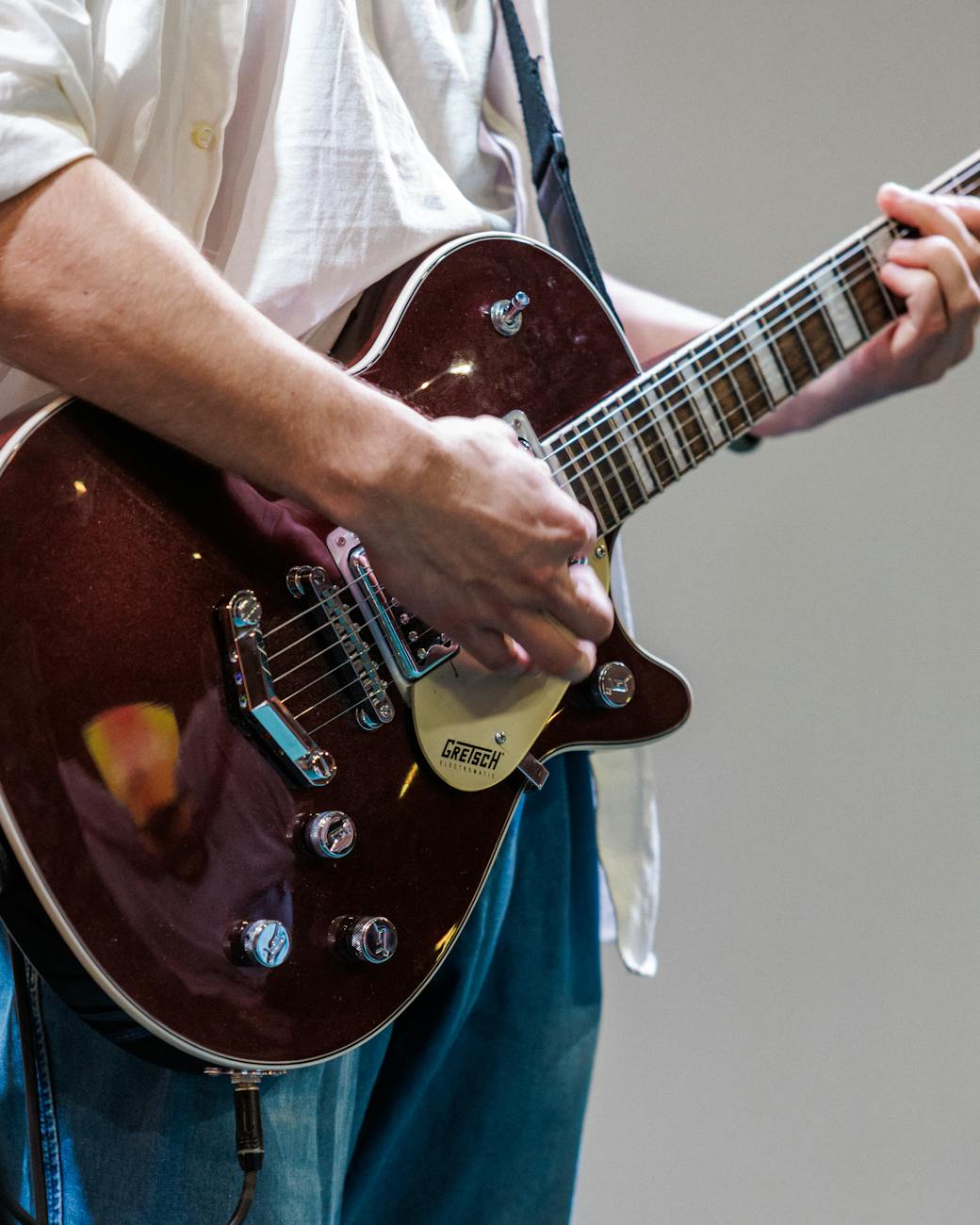
Quick answer: Playing guitar in any key comes from thinking in intervals and chord numbers instead of memorizing separate chord sets for each key. Learn a progression as numbers, such as 1, 5, 6, 4, then rebuild it from a new root note using the same pattern. Practice a few progressions in several keys each day while naming the root notes.
If you have ever learned a song on guitar and then panicked when someone said, “Can we do it in another key?” this guide is for you.
This is one of the most common frustrations beginner and intermediate guitar players face.
You spend hours memorizing chord progressions in G, C, D, or E… and then the moment a singer needs the song higher or lower, everything falls apart.
Suddenly the shapes feel unfamiliar. The progression disappears. And you realize something important:
you know chords, but you do not yet understand keys. This is the difference between memorizing songs and understanding music.
The guitar can feel deceptively shape-based in the early stages. You learn open chords, maybe some barre chords, perhaps a few scale boxes—but many players still feel trapped when they need to:
- change the key of a song,
- follow another musician,
- play with singers,
- transpose chord charts,
- understand Nashville Numbers,
- or move comfortably around the fretboard.
The good news is this:
You do not need to memorize every chord in every key individually. You need to understand the simple theory system underneath all keys. Once you learn intervals, number relationships, and practical chord movement, the mystery disappears.
In this complete beginner guide, you will learn how to play guitar in any key, how transposing actually works, why intervals matter, and how number thinking gives you complete musical flexibility.
👉 Get Guitar Intervals: Learn to Play in Any Key on Amazon
Why Do Most Guitar Players Feel Stuck in Only a Few Keys?
Most players begin by learning songs with open chords:
- G
- C
- D
- E
- A
- Am
- Em
This works fine at first. But open chord learning creates an invisible dependence:
you begin associating songs with hand shapes instead of musical functions. So when you play a progression like:
G – D – Em – C you may know where to put your fingers… but you may not know what those chords are doing inside the key.
That becomes a major problem when someone says:
“Let’s move this song to A.”
Now all the shapes change, and unless you understand the relationship between the chords, it feels like learning a new song from scratch. This is why many guitarists can play dozens of songs but still cannot comfortably play in any key.
👉 Watch guitar lessons on YouTube
What Does “Playing in Any Key” Actually Mean?
Playing in any key does not mean memorizing every possible chord progression in twelve separate keys. It means understanding:
- how chords are built,
- how chords function inside a key,
- how intervals determine distance,
- and how progressions can be moved as a unit.
Music is relational. Keys are not isolated random collections of chords. They follow repeatable mathematical spacing. When you understand that spacing, transposition becomes logical instead of intimidating.
👉 Get charts and practice materials on Patreon
Why Are Intervals the Foundation?
The single most important concept for playing in any key is the interval. An interval is simply the distance between one note and another. On guitar, every fret equals one half step.
That means if you know the interval pattern between notes, you can rebuild the same musical idea starting anywhere. For example:
- root to major 2nd = 2 frets
- root to major 3rd = 4 frets
- root to perfect 4th = 5 frets
- root to perfect 5th = 7 frets
These distances never change. Only the starting note changes. That means theory is movable. This is one of the most freeing realizations on guitar. You are not memorizing isolated keys.
You are learning repeatable note relationships. Guitar Intervals Explained covers the basics.
👉 See Guitar Intervals: Learn to Play in Any Key on Amazon
Why Do Intervals Matter More Than Chord Names?
Chord names can feel overwhelming:
G, Bm, F#m, C#, Ebm7, Ab, etc. But intervals simplify everything because they show the relationship behind the names. If you know a progression is:
1 – 5 – 6 – 4 then that same emotional progression works in every key. Examples:
In G major:
G – D – Em – C In A major:
A – E – F#m – D In C major:
C – G – Am – F Different chord names. Same number relationship. Same musical function. This is why professional players think in numbers. Numbers transpose instantly.
Memorized chord names do not.
👉 See these ideas demonstrated on YouTube
What Is the Nashville Number System on Guitar?
One of the fastest practical ways to learn any key is understanding the Nashville Number System. Instead of writing songs as literal chord names, musicians assign each chord a number based on its position in the scale.
In any major key:
1 = major
2 = minor
3 = minor
4 = major
5 = major
6 = minor
7 = diminished So if a chart says:
1 – 4 – 5 you can play that progression in any key immediately. In G:
G – C – D In D:
D – G – A In A:
A – D – E Same progression. New key. No panic. This is why Nashville Numbers are used constantly in:
- worship teams,
- studio sessions,
- country bands,
- church music,
- and live accompaniment settings.
They make transposition practical under pressure. See How to Learn the Nashville Number System on Guitar.
👉 Join Patreon for lessons and charts
How Do You Instantly Transpose a Chord Progression?
Let’s say you know this common progression:
C – G – Am – F Instead of memorizing those four chord names only, identify the numbers:
C = 1
G = 5
Am = 6
F = 4 So the progression is:
1 – 5 – 6 – 4 Now if the singer needs it in E major, simply rebuild the same numbers:
1 = E
5 = B
6 = C#m
4 = A New progression:
E – B – C#m – A That is transposition. Not guesswork. Not trial and error. Just numerical movement. How to Transpose Guitar Chords Without Using a Capo has worked examples.
👉 Learn every key with Guitar Intervals: Learn to Play in Any Key
Why Are Barre Chords Alone Not Enough?
Some players assume learning barre chords automatically means they can play in any key. Not necessarily. Barre chords make chord forms movable, which is helpful. But movable shapes without number understanding still leave a player dependent on memorization.
You may be able to slide an E-shape chord up and down the neck… but if you do not understand what chord number it represents inside the key, you still struggle when progressions change quickly.
Technique helps movement. Theory helps understanding. You need both. The Best Way to Connect Barre Chords Across the Guitar Neck explains what to add.
👉 Watch more guitar lessons on YouTube
How Playing in Any Key Changes Your Musicianship
Once you begin thinking in intervals and numbers, several things improve immediately.
1. You Follow Singers Better
If a vocalist says “let’s move this up two steps,” you can adapt.
2. You Learn Songs Faster
You stop memorizing isolated key-specific shapes.
3. Jam Sessions Become Easier
You can identify common progressions by function.
4. Worship and Church Playing Gets Smoother
This is huge in live ministry settings where spontaneous key changes happen often.
5. Your Fretboard Finally Starts Making Sense
Theory gives context to every chord you play.
👉 Go deeper with practice materials on Patreon
The Daily Practice Method to Learn Any Key Faster
Here is a simple routine beginners should use.
Step 1 — Take a Common Progression
Use something like 1–4–5 or 1–5–6–4.
Step 2 — Play It in Three Different Keys
Do not stay in G forever.
Step 3 — Say the Numbers While You Play
Train the ear and brain together.
Step 4 — Locate the Root Notes on the Neck
This builds fretboard awareness.
Step 5 — Practice With Both Open and Barre Chord Options
See the progression in multiple places. Do this daily and key changes become normal instead of terrifying.
👉 Pick up Guitar Intervals: Learn to Play in Any Key on Amazon
Why Most Free Guitar Theory Lessons Leave Players Confused
A lot of online guitar theory content explains concepts in isolation:
- here are intervals,
- here are scales,
- here is Nashville Numbers,
- here is transposition.
But many players still do not know how to connect those concepts practically on the instrument. That is the missing piece. You do not just need theory definitions.
You need a visual guitar-based application system. Theory only becomes useful when it shows you exactly where to move and why.
👉 Follow along with lessons on YouTube
Best Book for Learning How to Play in Any Key on Guitar
If you want one organized visual guide that teaches interval relationships, practical chord movement, Nashville Number understanding, and real fretboard transposition, an excellent resource is:
This book was built specifically for guitar players who feel stuck in familiar shapes and want to understand how music moves. It covers:
- interval recognition,
- chord construction,
- Nashville Number application,
- practical transposition,
- fretboard logic,
- and movable theory concepts designed for real playing situations.
You can find it here:
Why This Skill Separates Casual Players From Functional Musicians
There is a huge difference between someone who can play memorized songs and someone who can function musically in real time. Functional musicians can:
- change keys,
- follow charts,
- accompany singers,
- adjust on the fly,
- and understand why chords work.
This ability does not come from collecting more songs. It comes from understanding relationships. Intervals teach relationships. Numbers organize relationships. Transposition applies relationships. That is how you become comfortable in any key.
Final Thoughts
If playing in a new key currently feels like starting over, that does not mean guitar is too complicated. It usually means you have been taught shapes without enough relational theory.
Once you begin seeing:
- interval distances,
- chord numbers,
- fretboard roots,
- and progression functions,
the neck becomes far less mysterious. You stop asking, “What chord shape do I know here?” and start asking, “What number is this chord, and where does it move?”
That shift changes everything.
And if you want a complete guitar-specific system for learning that skill, Learn to Play in Any Key provides a structured path that makes those concepts visual, practical, and usable in real music.
👉 Get Guitar Intervals: Learn to Play in Any Key on Amazon
Frequently Asked Questions About Playing Guitar in Any Key
How can I learn to play guitar in any key?
The fastest way is to learn interval relationships, chord numbers, root note locations, and practical transposition. This helps you move progressions as a system instead of memorizing separate songs in every key.
What is the easiest way to transpose guitar chords?
The easiest way is to convert the chord progression into numbers such as 1, 4, 5, or 1, 5, 6, 4, then rebuild those same numbers in the new key.
Do I need to memorize every chord in every key?
No. You need to understand how chord functions repeat. Once you know the number relationships, every key follows the same structural logic.
Does the Nashville Number System help beginners?
Yes. Nashville Numbers help beginners understand songs by function instead of isolated chord names, which makes transposing and learning progressions much easier.
What is the best book to learn guitar in every key?
👉 Subscribe for new lessons on YouTube
A strong practical resource is Learn to Play in Any Key, which teaches intervals, Nashville Numbers, transposition, and fretboard understanding in one organized guitar method. You can find it here: https://www.amazon.com/dp/B0G6WV3G2N
Leave a Reply