
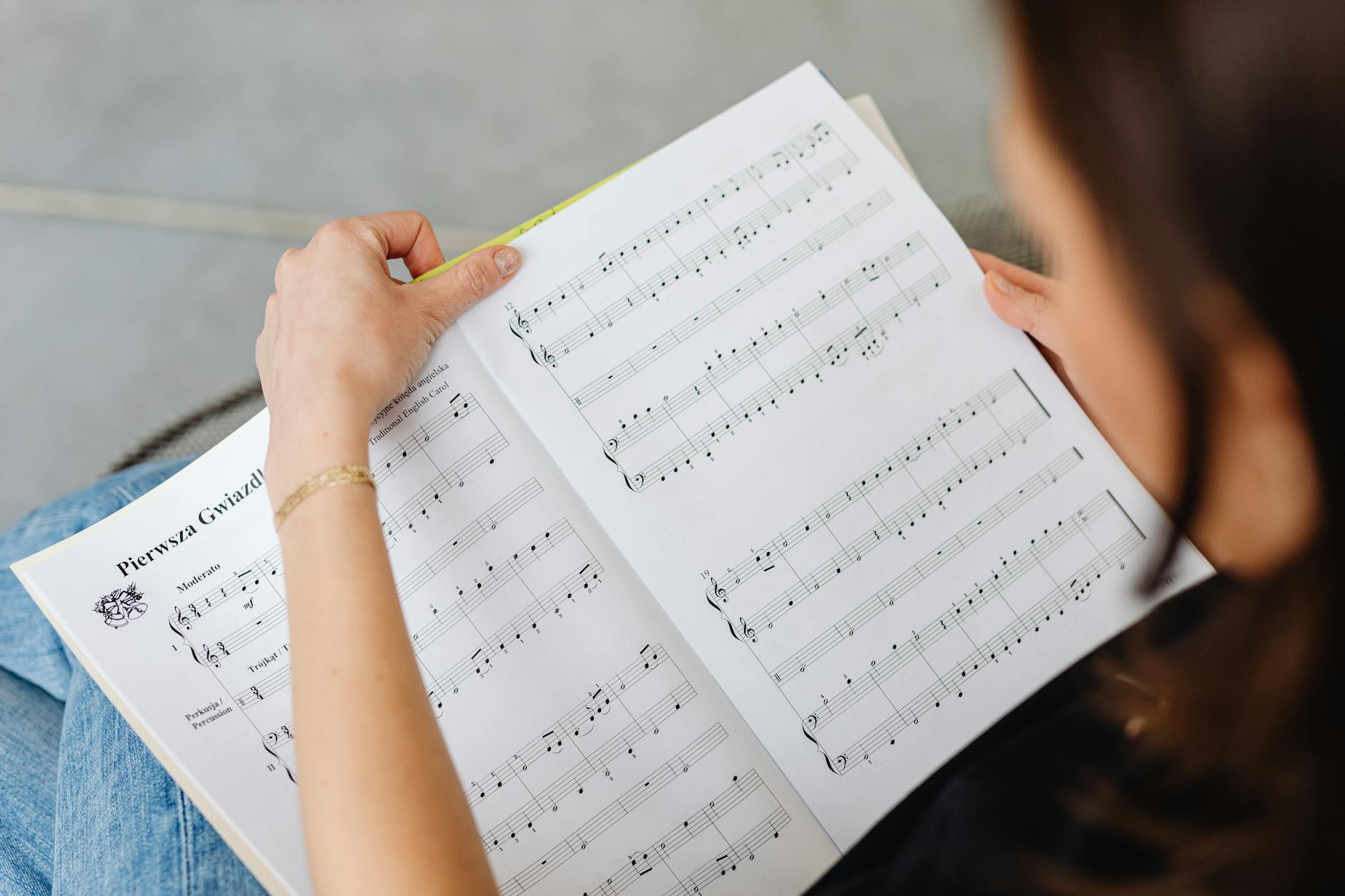
Have you ever watched a musician hear a song once and instantly start finding the chords, melody, or bass movement?
It almost looks like magic.
But what you’re really seeing is not talent — it’s ear training.
The ability to recognize intervals, hear chord changes, identify scales, and understand harmonic movement by listening is one of the most valuable musical skills you can develop. It helps you:
- learn songs faster
- improvise with more confidence
- transcribe music without guessing
- play by ear in real time
- understand what you’re hearing on a deeper level
The problem is that most musicians never train this skill correctly.
They either:
- listen passively and hope their ear improves
- watch random YouTube quizzes
- attempt occasional transcription
- or give up because progress feels too slow
The truth is, ear training becomes dramatically easier when you use focused repetition and structured listening drills.
And today, that process is much more accessible thanks to guided systems like Earify Pro, where musicians can practice intervals, chords, scales, and progressions in short daily sessions instead of trying to invent exercises from scratch.
👉 Start building your ear with guided daily drills here: https://join.earify.pro/
What Does It Actually Mean to Train Your Ear for Music?
Ear training is the process of teaching your brain to identify and organize musical sounds.
Instead of hearing music as a blur of notes, you begin to hear:
- the distance between notes
- whether a chord is major, minor, dominant, or diminished
- what key center the song is in
- how the harmony is moving
- where melodies are resolving
This is the skill behind:
- playing songs by ear
- figuring out chord progressions quickly
- singing in tune
- improvising melodically
- transcribing music accurately
In short:
you stop just hearing music… and start understanding it.
That’s why every serious musician eventually realizes that theory without ear recognition only gets you halfway.
Why Most Musicians Stay Stuck for Years
This is important:
Ear training is not improved by passive listening alone.
You can listen to music every day for ten years and still struggle to identify:
- whether the chord changed to minor
- what interval just happened
- whether the melody landed on the root or 5th
- when the progression resolved
Why?
Because recognition is built through active comparison.
Your brain needs to repeatedly hear a sound, make a choice, get feedback, and hear it again.
That repetition forms musical memory.
Without that loop, most musicians simply stay in “I kind of hear it but can’t name it” mode.
This is why structured repetition matters so much more than casual listening.
If you want a guided place to build that repetition daily, Earify Pro gives you progressive drills that train these exact recognition skills in just a few minutes a day.
👉 Try Earify Pro here: https://join.earify.pro/
The 5 Core Ear Training Skills Every Musician Should Practice
If your goal is to improve as fast as possible, focus on the foundational listening categories below.
Trying to train everything at once usually leads to overwhelm.
These five areas create the biggest transformation.
1. Interval Recognition
An interval is the distance between two notes.
Every melody you have ever heard is built from intervals.
When your ear learns to recognize sounds like:
- minor 2nd
- major 2nd
- minor 3rd
- major 3rd
- perfect 4th
- tritone
- perfect 5th
melodies stop sounding random.
You begin hearing shape.
This makes it easier to:
- pick out melodies
- sing notes back accurately
- recognize hooks in songs
- transcribe phrases much faster
Beginner tip: only train 2–3 intervals at first until those sounds become familiar.
2. Chord Quality Recognition
Most musicians hear a chord and think:
“I know it changed… but I have no clue what it changed to.”
That’s because chord quality has to be trained intentionally.
You need to become familiar with the emotional fingerprint of:
- major
- minor
- diminished
- augmented
- dominant 7th
- major 7th
- minor 7th
- suspended chords
When these become recognizable, songs start making much more sense.
You no longer hear “mystery harmony.”
You hear function and color.
This is one of the biggest daily practice categories inside Earify Pro, because chord recognition tends to create immediate real-world playing improvements.
👉 Practice chord hearing and interval drills here: https://join.earify.pro/
3. Scale Degree Awareness
This is one of the most overlooked parts of ear training.
Scale degree awareness means hearing where a note sits inside the key.
Can you tell if the melody landed on:
- the root?
- the 3rd?
- the 5th?
- the leading tone?
- the 6th?
This matters because relative pitch is not just hearing notes…
it’s hearing note relationships.
Musicians with strong scale awareness can:
- harmonize faster
- sing with stronger intonation
- improvise more musically
- identify melody tension and release
4. Chord Progression Hearing
This is where ear training starts feeling magical.
Instead of hearing isolated chords, you begin hearing movement patterns.
Examples:
- I → IV → V
- ii → V → I
- I → V → vi → IV
- vi → IV → I → V
When your ear recognizes harmonic motion, learning songs becomes exponentially easier.
You start predicting where the music wants to go.
This is one reason many musicians struggle with “playing by ear” — they are trying to identify every chord as a separate event instead of hearing progression function.
5. Real-Time Instrument Response
Hearing a sound is one skill.
Finding it instantly on your instrument is another.
Your fastest progress happens when you practice:
hear it → identify it → play it back
This creates connection between:
- your listening
- your theory knowledge
- your hands
Without this loop, ear training can stay abstract.
With it, the skill becomes practical musicianship.
The Fastest Daily Ear Training Routine for Beginners
You do not need an hour.
You need consistency.
A focused 10–15 minute daily routine is enough to produce major change over time.
Here is a simple framework:
Minutes 1–4: Interval Identification
Practice hearing ascending and descending intervals.
Keep the set small.
Minutes 4–7: Chord Quality Drills
Major vs minor first.
Then add 7th chord colors.
Minutes 7–10: Scale Degree Listening
Hear notes against a tonic center.
Practice hearing function.
Minutes 10–15: Progression Recognition
Listen for common harmonic movement.
Repeat often.
This is exactly why guided ear training platforms work so well:
they remove the question of what should I practice today?
Instead of wasting time searching for random exercises, you simply open a system that already has progression built in.
Earify Pro was designed specifically for this kind of daily ear development — short sessions, instant feedback, and progressively harder drills.
👉 Start your daily ear training routine here: https://join.earify.pro/
Why Random Ear Training Methods Usually Fail
Most musicians try ear training in scattered ways:
- one YouTube interval video this week
- transcribe part of a solo next week
- guess chords on piano occasionally
- forget about it for two weeks
That approach feels productive…
but it rarely creates enough repetition density.
Musical recognition is built through:
- consistency
- immediate correction
- repeated exposure
- increasing difficulty
Without those four things, improvement stays slow.
That is why musicians who use dedicated ear training systems often improve much faster than those trying to DIY the process.
Because the biggest challenge in ear training is not information.
It’s structured repetition.
How Long Does It Take to Develop a Better Ear?
This depends on consistency more than talent.
With 10–15 focused minutes per day, many musicians begin noticing:
within 1–2 weeks:
- intervals become less confusing
- major/minor starts sounding clearer
- melodies become easier to sing back
within 30 days:
- chord changes become easier to hear
- songs feel less harmonically random
- common progressions become recognizable
within 60+ days:
- transcribing gets faster
- improvisation becomes more intentional
- playing by ear feels less intimidating
The musicians who improve fastest are simply the ones who keep the repetition loop going every day.
That’s why app-based systems have become so effective — they make consistency easier.
👉 Build that consistency with Earify Pro: https://join.earify.pro/
Ear Training Is Not a Gift — It’s a Trained Response
Some people assume musicians with strong ears were “born with it.”
Usually, they just spent enough time repeatedly naming sounds.
That process can be built deliberately.
You do not need:
- perfect pitch
- advanced jazz theory
- elite conservatory training
You need:
- focused drills
- daily repetition
- instant feedback
- patience
As soon as your brain begins attaching names and functions to the sounds you hear, music starts opening up in a completely different way.
And that’s when playing by ear stops feeling impossible.
Frequently Asked Questions About How to Train Your Ear for Music
Can you train your ear for music if you’re a beginner?
Yes. Ear training is a learnable pattern-recognition skill. Even complete beginners can improve quickly with daily interval, chord, and progression drills.
How long does it take to improve your musical ear?
Most musicians notice early improvement within a few weeks, with much stronger recognition developing after 30–60 days of consistent practice.
Do you need perfect pitch to train your ear?
No. Relative pitch is far more important for practical musicianship and playing by ear.
What is the fastest way to improve ear training?
Short daily structured drills with instant feedback produce faster results than occasional long practice sessions.
What is the best app for musical ear training?
The best ear training apps provide progressive interval, chord, scale, and progression drills in a format that makes daily consistency easy.
Can ear training help you learn songs by ear?
Absolutely. Stronger interval and chord recognition make it dramatically easier to identify melodies, harmonies, and song movement by listening.
Leave a Reply