
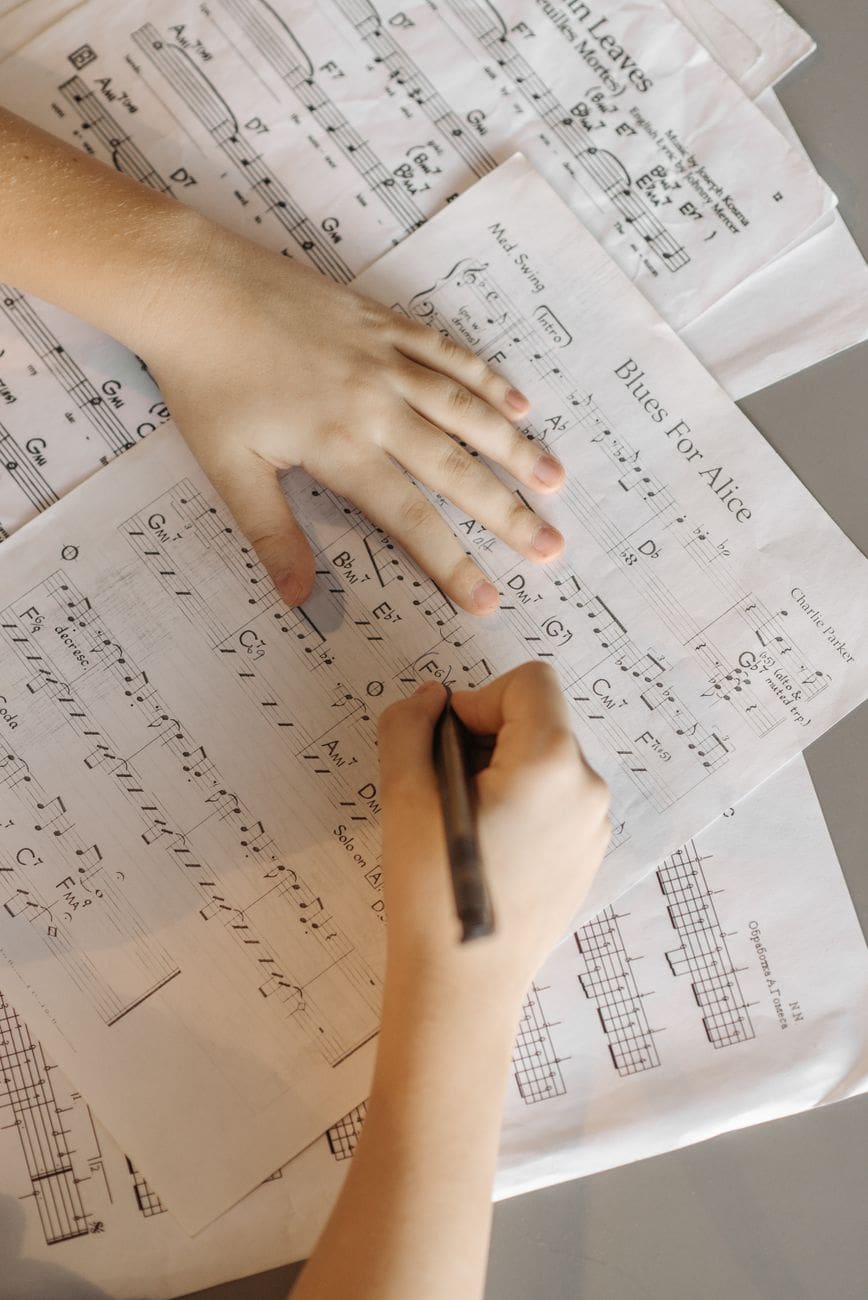
Guitar chord sheets for beginners provide one of the quickest paths from practicing isolated chord shapes to playing complete songs. A chord sheet shows the progression and structure of a song without requiring you to read standard notation or learn every detail of the original guitar recording. Once you know a small group of common chords, you can use a clear chart to accompany vocals, play with friends, and build a growing repertoire.
The challenge is that a chord sheet assumes you already understand certain basics. You need to recognize chord symbols, know when to change, follow measures, and keep a steady rhythm. You also need to decide which chord shapes, strumming patterns, and capo positions make sense for the song.
This beginner guide explains how guitar chord sheets work, which chords to learn first, how to follow song form, how to practice transitions, and how to use a chord sheet app to organize songs as your skills improve.
Quick Answer
Beginner guitarists should use chord sheets that contain familiar open chords, clear measure lines, simple section labels, and manageable tempos. Practice chord pairs first, add one steady strumming pattern, and then play the complete song without stopping.
Key Takeaways
- Learn a small group of common chords before chasing large chord libraries.
- Practice difficult transitions as two-chord loops.
- Keep strumming simple until the chord changes are reliable.
- Use a capo or simplified voicings when they make the song more playable.
What Is a Guitar Chord Sheet?
A guitar chord sheet is a simplified map of a song’s harmony. It lists chord symbols in the order they occur and usually divides the music into sections such as the intro, verse, chorus, bridge, and ending.
A basic progression might look like this:
G | D | Em | C
Each vertical line marks the end of a measure. In a typical 4/4 song, each chord may last four beats. You would count “1, 2, 3, 4” while playing G, then change to D for the next four beats.
The chart tells you which harmony to play, but it may not tell you the exact strumming pattern or chord voicing. That flexibility lets you simplify the song at first and add detail as you improve.
Learn the Most Useful Beginner Chords
You do not need hundreds of chords to start playing songs. Focus first on common open chords:
C, A, G, E, and D major
Am, Em, and Dm
A7, D7, E7, and G7
These shapes appear in countless songs and provide a strong foundation. Learn each shape slowly. Make sure every required string rings clearly and muted strings stay quiet.
Do not wait until every chord is perfect before trying a song. Choose charts that use two or three shapes you know, then build from there. Song-based practice gives your fingers a reason to make the changes and helps you connect chord shapes with rhythm.
Understand Major and Minor Chord Symbols
A single capital letter usually means a major chord. G means G major. D means D major. When a lowercase “m” follows the letter, the chord is minor. Em means E minor, and Am means A minor.
Major and minor describe the chord’s structure and sound, not how loudly it should be played. Major chords often sound stable or bright, while minor chords often sound darker or more reflective, but context changes how they feel.
You may also see numbers and abbreviations. G7 is a dominant seventh. Cadd9 adds a note to the basic C chord. Dsus4 is a suspended chord. Learn these as they appear in songs rather than trying to memorize every possible symbol at once.
Read Measures and Count Beats
One of the most important beginner skills is changing chords at the correct time. A chart may show the right chord sequence, but you need to count the duration.
In 4/4 time, there are four beats in each measure. A chart written as:
C | G | Am | F
usually means four beats of each chord. Count steadily and make the change on the next “1.”
If two chords share a measure:
C G | Am F
play C for two beats, G for two beats, Am for two beats, and F for two beats, unless the chart indicates a different rhythm.
Practice counting aloud. Rhythm is more important than playing every string perfectly. A slightly imperfect chord that arrives on time usually sounds more musical than a perfect chord that arrives late.
Follow the Song Sections
Chord sheets divide music into recognizable parts. The intro begins the song. Verses often share the same melody but use different lyrics. The chorus usually contains the main hook. A bridge introduces contrast. The outro ends the arrangement.
Read the full chart before starting. Notice whether the verse progression repeats, whether the final chorus is played twice, and whether the ending uses a different chord.
When practicing, say the section names aloud or write the roadmap on a separate line:
Intro, Verse, Chorus, Verse, Chorus, Bridge, Chorus x2, Outro
Learning to follow form prevents the common beginner problem of knowing the chords but getting lost in the song.
Practice Chord Changes in Pairs
If a song uses G, D, Em, and C, do not repeatedly play the entire chart while struggling at every transition. Isolate the pairs:
G to D
D to Em
Em to C
C to G
Set a slow tempo and switch between each pair for one minute. Look for fingers that can remain in place or move together. Keep your hand relaxed and avoid lifting every finger far from the fretboard.
Then play the full progression. Targeted transition practice produces faster improvement than restarting the song every time you miss a chord.
Use a Simple Strumming Pattern
Beginners often believe they must copy the recording’s exact rhythm immediately. Start with a simple pattern that keeps the beat.
First, play one down-strum on each beat. Count “1, 2, 3, 4.” Next, try down-strums on beats 1 and 3. Then add eighth notes by counting “1 and 2 and 3 and 4 and.”
A common pattern is down, down-up, up-down-up, but do not force it into every song. Listen to the groove and identify where the strongest accents occur.
Keep the strumming hand moving even while changing chords. The hand acts like a clock. If you stop the motion during a difficult transition, the rhythm collapses.
Simplify Difficult Chords
A beginner chart may contain barre chords such as F, Bm, or Bb. You have several options.
You can learn a smaller partial shape. For F, try the top four strings before attempting the full six-string barre chord. You can use a capo and transpose the chord shapes. You can also choose an alternate voicing higher on the neck.
Simplifying is useful when it preserves the song and keeps you in time. However, continue practicing the full chord separately so the temporary solution does not become a permanent limitation.
Chord Sheet Pro can transpose a chart into a key that uses more comfortable open chords. Compare several keys and capo positions to find an arrangement that fits your current level.
Ready to put this into practice?
Create and transpose your first chord sheet in Chord Sheet Pro
Understand Capo Chord Sheets
A capo clamps across the fretboard and raises the pitch of every open string. It allows you to use familiar shapes in a different sounding key.
If a chart says “Capo 2, play G,” the G shape sounds as A. A C shape sounds as D, a D shape sounds as E, and an Em shape sounds as F#m.
A chord sheet may show either the shapes you play or the concert chords that everyone hears. Check the label carefully. In a band, write both:
Concert key: A
Guitar: Capo 2, G shapes
This allows guitarists and non-guitarists to follow the same arrangement without confusion.
Read Slash Chords on Guitar
A slash chord specifies the bass note. G/B means a G chord with B as the lowest note. D/F# means D major with F# in the bass.
On guitar, slash chords often create smoother bass movement. You may not need a completely new shape. G/B can be played by avoiding the low E string and allowing B on the fifth string to become the lowest note.
Listen to the bass line and learn the most practical fingering. The note after the slash matters, especially when the progression descends or ascends step by step.
Choose Songs at the Right Difficulty
A useful beginner song has a manageable number of chords, predictable measure lengths, and a tempo you can slow down. Songs with two to four open chords are ideal at first.
Difficulty depends on more than the number of chords. A song with three shapes can still be challenging if the changes are fast. A song with six chords may be easier if each one lasts several measures.
Choose music you enjoy. Motivation matters. A technically perfect beginner exercise is less useful if you never want to play it.
Create a progression-only version first. Add the full form after the changes feel comfortable.
Practice With a Metronome
A metronome reveals whether your chord changes are truly steady. Set it slower than the recording. Play one chord per measure and change on beat 1.
If you cannot make the transition in time, slow down. Do not repeatedly practice a rushed movement. Build a clean motion at a tempo you can control, then increase by a few beats per minute.
You can also practice with a drum loop. The groove may feel more musical, but the goal remains the same: maintain the pulse and change chords without stopping.
Look Ahead in the Chart
Train your eyes to move ahead of your hands. While playing the current chord, glance at the next measure. Prepare mentally before the change arrives.
This is easier when the chord sheet has clean spacing and clear section labels. Crowded pages force you to search for information at the moment you need it.
During live playing, do not stare at your fretting hand after every change. Use quick checks, then return your attention to the chart, singer, or band leader.
Build Dynamics Into the Song
Playing the correct chords from beginning to end is only the first stage. Music needs contrast.
Use lighter strumming in the verse and fuller strumming in the chorus. Palm mute the intro. Play single down-strums in a breakdown. Add open strings or higher voicings in the final chorus.
A chord sheet may include notes such as “down,” “build,” “full,” or “stop.” Use those cues to shape the arrangement. If the chart does not include dynamics, listen to the recording and add your own short notes.
Learn the Nashville Number System Gradually
The Nashville Number System represents chords by their position in the key. In G major, G is 1, C is 4, D is 5, and Em is 6m.
The progression G, D, Em, C becomes 1, 5, 6m, 4. In D major, the same numbers become D, A, Bm, G.
Numbers help you recognize patterns and transpose songs. Start by writing the number above each chord in an easy chart. Chord Sheet Pro lets you switch between chord names and Nashville numbers, so you can learn the relationships without giving up the symbols you already know.
Organize Songs by Skill Level
Create collections such as Two-Chord Songs, Open-Chord Songs, Capo Songs, Barre Chord Practice, and Performance Ready. This turns your library into a practice plan.
A song can move from one collection to another as you improve. You may begin with a simplified version, then duplicate the chart and add the original chords later.
Keeping charts organized also helps you see progress. A growing Performance Ready collection is more motivating than a folder full of unrelated screenshots.
Use Chord Sheet Pro for Beginner Practice
Chord Sheet Pro gives you a clean place to find, create, edit, transpose, and organize song chord sheets. You can keep your beginner repertoire available on your phone or computer, change keys when a progression is difficult, and group songs into collections.
Visit Chord Sheet Pro and begin with one song that uses chords you already know. Follow the measures, practice the transitions, and keep a steady beat. When the song is comfortable, add another chart with one new chord.
Turn Chord Knowledge Into Real Music
Guitar chord sheets for beginners connect technical practice with complete songs. They teach you to change shapes in time, follow form, listen to harmony, and support a melody.
Start with common open chords. Count beats aloud. Practice difficult pairs. Use simple strumming. Choose a capo when it supports the arrangement. Organize songs by skill level and revisit them regularly.
The goal is not to rush through as many charts as possible. The goal is to make each song feel steady, musical, and confident. A clear chord sheet gives you the roadmap. Consistent practice turns that roadmap into music.
Keep every chart ready for practice, rehearsal, and performance.
Start your organized song library in Chord Sheet Pro
Frequently Asked Questions
Which guitar chords should beginners learn first?
C, A, G, E, D, Am, Em, and Dm cover many beginner songs. Add dominant seventh chords and easier barre-chord alternatives as needed.
How do you read chord changes above measures?
Each chord applies until the next chord appears. Bar lines show measures, and multiple chords inside one measure divide the available beats.
Should beginners use a capo?
Yes, when it places the song in a comfortable vocal key while allowing easier chord shapes. The chart should clearly state the capo fret and the shapes to play.
How do you practice a full song without stopping?
Slow the tempo, simplify the strumming pattern, look ahead to the next chord, and continue through small mistakes instead of restarting every time.
Leave a Reply