
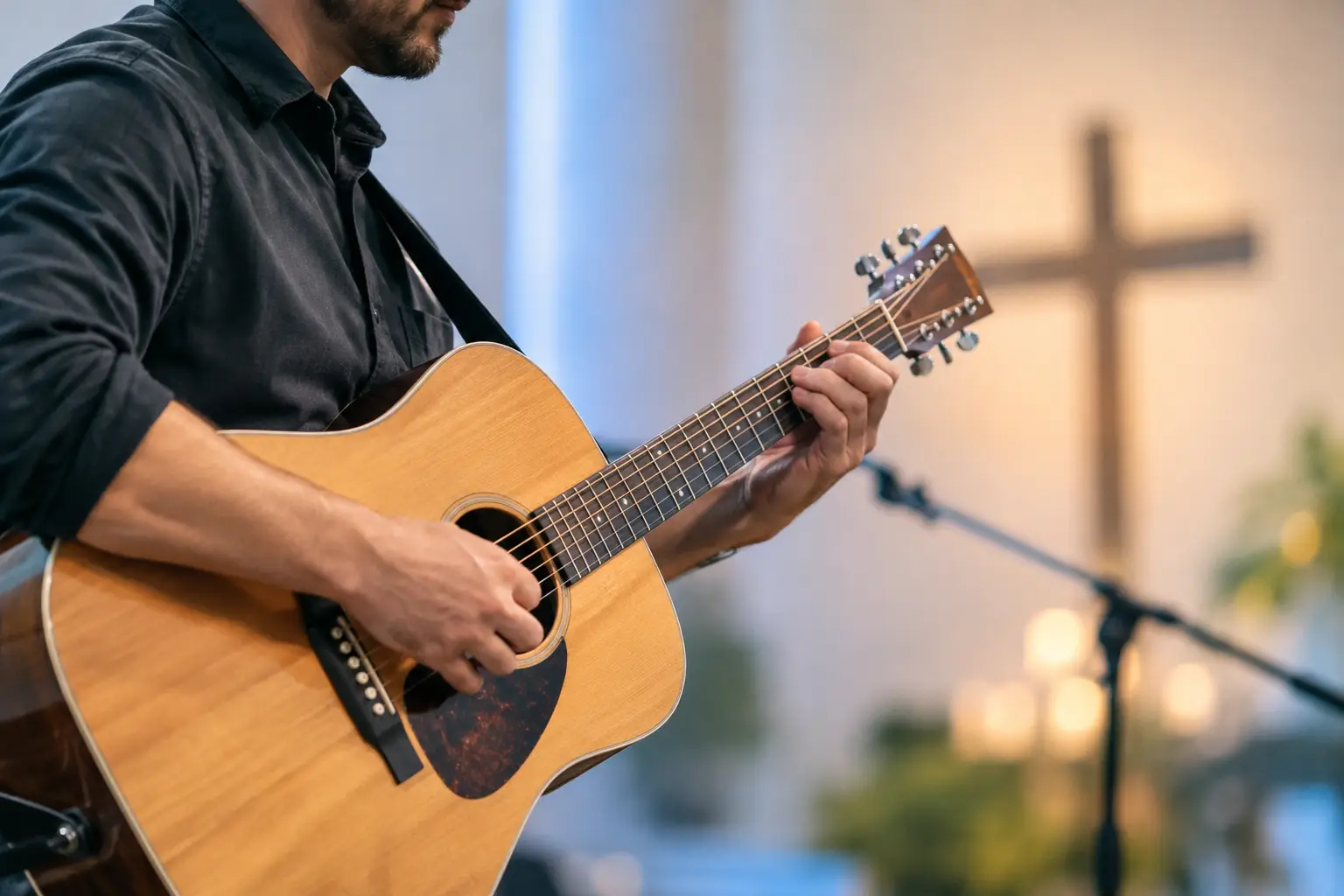
A good worship guitar tone is not the sound that turns the most heads during rehearsal. It is the sound that helps the room sing, supports the worship leader, and leaves space for keys, vocals, bass, and drums. This worship guitar tone guide will help you build a usable sound from the gear you already own, then adjust it with confidence for the real demands of a church service.
The goal is not to copy one famous player or chase an expensive pedalboard. Your guitar tone should help you play your part clearly in a changing service flow: a quiet verse, a full chorus, spontaneous ministry, a gospel-influenced vamp, or a transition into prayer. Great tone is really musical awareness you can hear.
Worship Guitar Tone Guide: Start With Your Role
Before you touch an amp setting or pedal knob, ask what your guitar is meant to do in the band. In many worship settings, guitar is not the main instrument all the time. You may be adding rhythmic definition, harmonic color, a melodic hook, or an atmospheric pad-like layer. Each job needs a slightly different sound.
If there is one keyboard player covering piano and pads, a bright, articulate electric guitar can bring needed movement without competing. If there are two keyboard players, a full acoustic guitar, and a strong vocalist, you may need a thinner, more focused tone with less low end. The right setting depends on the arrangement, the room, and who else is playing.
This is especially important in gospel and church bands, where rich keyboard voicings can fill a lot of sonic space. Your job is often to complement those chords with partial voicings, rhythmic scratches, fills, and carefully chosen inversions. A tone with too much bass, gain, or reverb can make a tasteful part disappear into the mix.
Build a Clean Foundation First
Most dependable worship tones begin with a clean or edge-of-breakup foundation. Clean does not mean thin or lifeless. It means your chords stay understandable, your single notes carry definition, and your effects have a clear place to sit.
Start with your amp or amp model set just below breakup. Play medium-strength chords and listen for a little warmth and compression, but not obvious distortion. Then play softly. Your sound should clean up rather than becoming dull. This gives you a responsive base that works for open chords, gospel voicings, and expressive lead lines.
Keep the low end under control. Guitarists playing alone often enjoy a large bass-heavy tone, but that same tone can fight the bass guitar, kick drum, and keyboard left hand. Roll back some bass before adding more treble. Then use mids to help the guitar speak. Mids are where much of your note clarity lives, especially when the full band is playing.
A practical starting point is moderate bass, healthy mids, and enough treble for definition without harshness. If your tone feels sharp, reduce the highest frequencies before removing all the presence. You want your chords to be heard, not to sound like they are cutting through the room.
Let Your Pickups Do Part of the Work
Pickup choice can change your role faster than another pedal can. The neck pickup often works well for warm chord melody, prayerful lead phrases, and smooth gospel fills. The bridge pickup can bring clarity to rhythmic parts and lines that need to cut through a busy arrangement.
The in-between pickup positions on many guitars are especially useful for worship. They can sound clear and chimey while staying less aggressive than a bridge-only setting. If your guitar has humbuckers, try lowering the guitar volume slightly to clean up the front end of your amp. That small adjustment can give you more control than constantly switching pedals on and off.
Use Drive for Energy, Not Volume
Overdrive is useful in worship music, but it should usually add energy and sustain rather than cover your notes. A drive tone that sounds exciting by itself can become muddy when the drummer, bass player, and keys enter.
Use low to moderate gain for most rhythm playing. Set the output level so engaging the pedal adds a little presence, not a huge volume jump. If you need a bigger chorus sound, pair a modest drive with a delay or a slightly stronger picking attack instead of turning the gain all the way up.
For gospel-influenced worship, clarity matters even more when you are playing extended chords. Major sevenths, ninths, thirteenths, and altered passing chords can lose their character under heavy distortion. If the congregation or worship leader needs to hear the chord movement, keep the drive light enough that each note still has a job.
Save higher-gain sounds for moments that truly call for them: a strong instrumental section, a rock-oriented arrangement, or a lead part with enough space around it. Even then, pull back when vocals return.
Delay and Reverb Should Follow the Song
Delay and reverb create the spacious sound many players associate with modern worship guitar. Used well, they make simple parts feel larger and more connected. Used carelessly, they blur time, crowd the vocal, and turn chord changes into a wash of sound.
For a steady song, begin with a rhythmic delay that supports the tempo. A dotted-eighth or quarter-note feel can work well, but the exact subdivision matters less than timing. If your delay repeats are out of time, they will distract from the groove no matter how beautiful the tone is.
Keep the mix lower than you think at first. You should hear the original note clearly, with repeats sitting behind it. During a full-band chorus, shorter repeats and a lower mix often work better. During an open prayer moment or a quiet intro, you can raise the mix and feedback slightly to create more atmosphere.
Reverb should provide depth, not distance. A short room or plate-style reverb can add polish to rhythm work. A larger ambient reverb is helpful for swells, sparse lines, and moments when the guitar is helping carry the space between vocal phrases. If the band starts to sound unfocused, reduce reverb before changing every other setting.
Build Swells Without Losing the Chord
Volume swells are most effective when they support a specific harmonic movement. Choose a simple two- or three-note voicing, bring it in smoothly with your volume control or volume pedal, and let the delay and reverb extend it. Do not feel pressure to swell on every beat.
Listen for the keyboard player’s voicing and choose notes that add color rather than duplicate the entire chord. For example, over a major chord, adding the third, seventh, or ninth can be more useful than strumming all six strings. This approach sounds intentional and keeps the arrangement open.
Shape Tone for Rhythm, Fills, and Lead Lines
Church guitarists often need three practical sounds available quickly: a clean rhythm tone, a bigger ambient sound, and a focused lead tone. You do not need three separate amps or a complicated pedalboard to create them. A few thoughtful gain, delay, and EQ changes are usually enough.
Your rhythm tone should be the most dependable. It needs clear attack for muted strums, chord stabs, and syncopated gospel grooves. Keep effects controlled and use your picking dynamics to create movement.
Your ambient sound can add more delay and reverb, with a touch of drive if the song is building. This is useful for swells and sustained chord fragments, but it should not replace strong timekeeping.
Your lead tone needs mids and sustain. A lead line that is too scooped may sound smooth alone but vanish under keys. Bring up the mids, add a modest volume boost if needed, and use enough delay to lengthen phrases without hiding your articulation.
Check Your Tone in the Band, Not Just at Home
The most honest tone test happens at rehearsal. A sound that feels perfect through headphones or a bedroom amp may be too dark, too bright, or too wet through the church sound system. Ask a trusted bandmate or sound engineer what they are hearing, then make one adjustment at a time.
Practice playing the same progression at different intensity levels. Start with soft chord fragments, build into a rhythmic groove, then move into a fuller chorus sound. This trains you to change tone with your hands, pickup selector, guitar volume, and pedal settings without losing the flow of the song.
Also prepare your tones before service begins. Check your tuning, cables, power supply, output level, and tempo settings. The more prepared your setup is, the more attention you can give to the worship leader, the congregation, and the musical direction in the room.
A worship guitar tone becomes powerful when it serves more than your own sound. Learn to hear the space around your part, play what the moment needs, and let every setting help you support the song with skill, sensitivity, and confidence.
Leave a Reply