
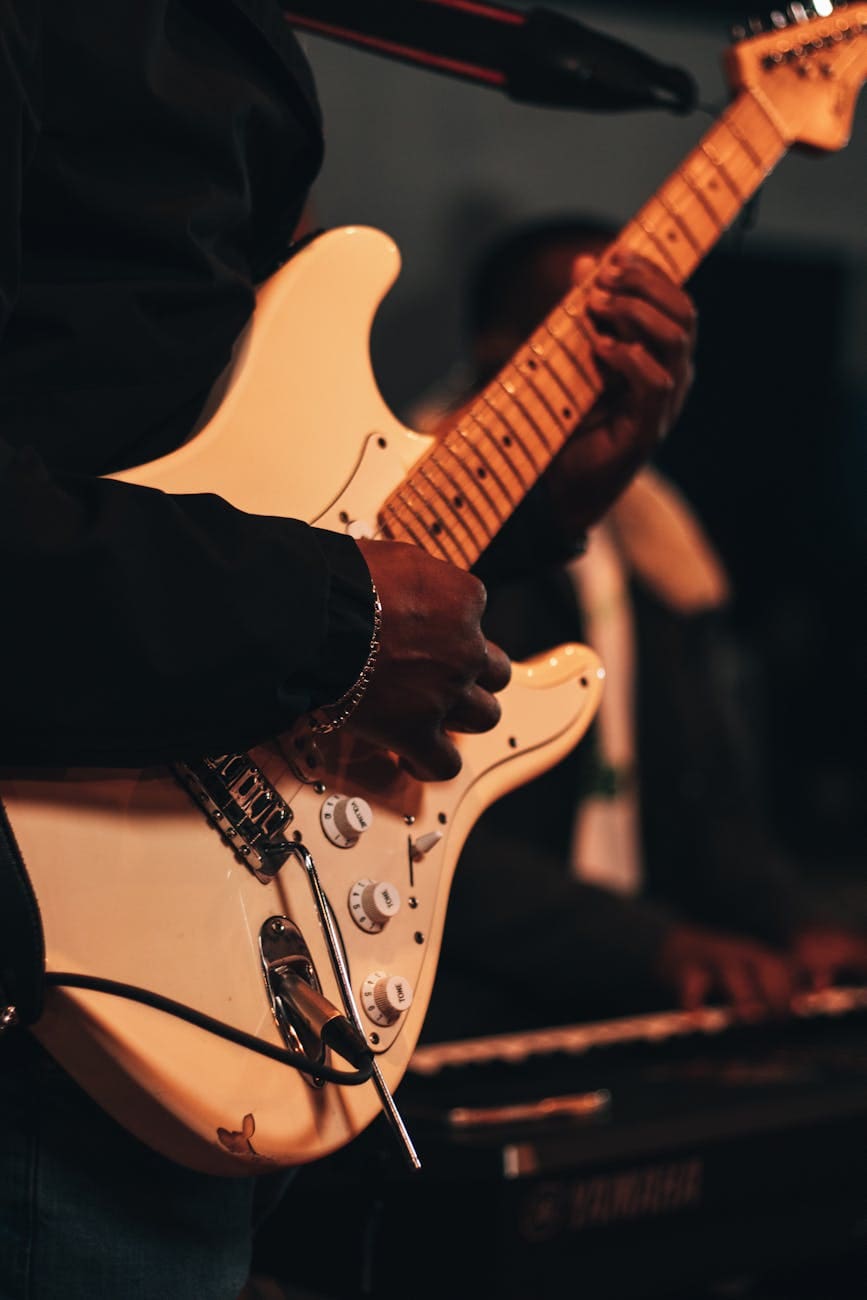
Quick answer: Both single coils and humbuckers work for gospel guitar. Single coils are brighter and clearer, so extended chords and rhythm parts stay defined in a dense band with keys and pads. Humbuckers are warmer, thicker, and quieter, which suits traditional gospel, smaller bands, and light overdrive. If you want one guitar for everything, an HSS guitar or a coil-split humbucker gives you both sounds.
One of the most common tone questions church guitarists ask is, “Should I use single coils or humbuckers for gospel guitar?” You hear great gospel players using both, which can make the decision confusing.
The truth is that both pickup types work, but they behave differently in a church mix. This guide breaks down how each one sounds, where each one fits, and how to decide what works best for your band and your room.
👉 Hear pickup comparisons in church-style settings on YouTube
Why Do Pickups Matter in Gospel Guitar?
Pickups shape how your guitar interacts with the band. They are the first link in your signal chain, so everything that follows, including your amp, EQ, and effects, works with whatever the pickups send. In gospel and church music, that tone needs to be:
- Clear enough that every note of a chord is heard
- Warm enough that it never sounds thin or harsh
- Controlled in volume and attack
- Easy to blend with other instruments
Your pickup choice affects clarity, output, and how your guitar sits next to keyboards, vocals, and bass. A bright pickup can cut through a thick keyboard pad, while a darker one can fill out a small band that has no keys at all.
Neither pickup type is more “church” than the other. It is about function, not loyalty to a brand or a look. Once you understand what each one does, you can make a practical decision instead of following a trend.
👉 Get structured tone and chord lessons on Patreon
What Do Single Coil Pickups Sound Like?
Single coil pickups use one coil of wire around the magnets. That simple design produces a sound known for brightness, clarity, and articulation. The attack of each note is quick and defined, and chords have a glassy quality that many players describe as “sparkle.”
They respond well to subtle dynamics. Play softly and they whisper. Dig in and they bite. That sensitivity makes them a natural fit for clean chord playing, rhythmic parts, and expressive single-note fills.
Many gospel guitarists like single coils because they cut through the mix without being loud. The Stratocaster, a three-single-coil guitar, has been a fixture in church bands for decades for this reason. You can read more about that history in The Importance of the Fender Stratocaster to Gospel Music.
👉 Watch single coil tones demonstrated on YouTube
When Do Single Coils Work Best in Church?
Single coils work especially well when you are playing clean or lightly driven tones, supporting modern worship, playing rhythm-focused parts, or working alongside full keyboards and pads. In those settings there is already plenty of low and mid-range sound, and a brighter guitar finds its own space above it.
They also let extended chords stay clear. When you play a major 9 or a 13th chord on the top four strings, each note needs to be heard for the chord to make sense. Single coils keep those notes separate, even in dense arrangements.
The main downside is noise. Single coils can hum in certain rooms, especially near stage lighting, dimmers, or older sound systems. Turning your body, lowering gain, or using the in-between pickup positions on a Strat-style guitar, which cancel hum, usually keeps it manageable.
👉 Join Patreon for lessons built for church musicians
What Do Humbucker Pickups Sound Like?
Humbuckers use two coils wired together so that the hum each coil picks up cancels out. That is where the name comes from. The same design also changes the tone, giving humbuckers their warmth, thickness, and higher output.
They provide a fuller sound with a stronger low-mid range. Harsh highs are smoothed out, and single notes sound rounder and sustain longer. If single coils sound like glass, humbuckers sound more like velvet.
Because they are quiet, humbuckers are dependable in rooms with electrical noise. Semi-hollow and solid-body guitars with humbuckers have a long history in traditional gospel, quartet, and jazz-influenced church playing for that reason.
👉 Hear humbucker tones in a band mix on YouTube
When Do Humbuckers Work Best in Church?
Humbuckers work especially well when you are playing traditional gospel, using light overdrive, supporting a smaller band, or playing in settings where warmth matters more than sparkle. In a trio of drums, bass, and guitar, a humbucker fills more of the space a keyboard would normally occupy.
They can sound rich and full, especially when paired with a clean amp or a good direct system. Slow songs and jazz-style chord melodies benefit from that roundness.
The downside is that humbuckers can feel too thick if they are not EQ’d properly, especially with keyboards present. If your chords sound muddy, lower the bass, raise the mids slightly, and try the bridge or middle position before you decide the pickups are the problem.
👉 Get chord and tone breakdowns on Patreon
How Do They Compare for Clean Tones and Overdrive?
For clean gospel guitar tones, single coils feel more open and airy, while humbuckers feel warmer and rounder. Both can sound excellent. Single coils often provide more separation in chord-heavy worship settings, and humbuckers can feel smoother in traditional gospel and ballads.
Pickup choice matters more once overdrive is introduced. With light overdrive, single coils stay articulate and keep their edge. Humbuckers add sustain and body, and they push the amp or pedal harder because of their higher output.
For gospel guitar, overdrive should remain subtle either way. Humbuckers often need lower gain settings to keep chords clear. A setting that sounds perfect with a single coil guitar may be too much when you plug in a humbucker guitar, so recheck your gain whenever you switch. For full settings, see Best Guitar Tone Settings for Gospel and Church Music.
👉 Watch clean and overdriven comparisons on YouTube
How Do You Blend With the Band Using Either Pickup?
Blending is more important than pickup type. Single coils often blend well by default, but they may need less treble in bright rooms with hard walls and tile floors. Humbuckers often need more mids and clarity to avoid sounding buried under the keys.
If you disappear in the mix, adjust EQ before blaming your pickups. Small changes at the amp, such as a little more midrange or a little less bass, solve most problems. Your guitar’s tone knob is also a quick way to tame brightness without touching the amp.
Think about register as well. If the keyboard player is working in the middle of the keyboard, move your chords higher up the neck. Staying out of each other’s range does more for the blend than any pickup swap. More on this in How to Listen and Play with Your Worship Band.
👉 Learn band-blending skills on Patreon
What Mistakes Do Guitarists Make With Pickups?
Many players struggle because they choose pickups based on trends, ignore EQ and amp settings, play too loud instead of blending, or expect pickups to fix technique. Each of those leads to spending money without solving the real issue.
Pickups enhance what is already there. They do not replace good timing and chord control. A clean, well-timed part will sound good through either type, and a sloppy part will sound sloppy through both.
Another mistake is ignoring pickup height. Pickups set too close to the strings sound harsh and loud, and pickups set too low sound weak. A basic setup that includes pickup height can change your tone more than new pickups would. See Setting Up Your Guitar for Gospel for the basics.
👉 See practical tone decisions for worship bands on YouTube
Which Pickup Is Best for Beginners, and Do You Have to Choose?
For beginners, the best pickup is the one that helps you hear your chords clearly, control your dynamics, and blend with the band. Both single coils and humbuckers can do that. Focus more on clean playing and rhythm than on switching guitars.
You also do not have to choose just one. Many gospel guitarists use guitars with HSS or HSH pickup configurations, which combine a humbucker and single coils, or humbuckers with a coil-split switch that produces a single-coil style sound.
These setups offer flexibility and are great for church musicians who play multiple styles in one service. Versatility often matters more than purity. If you are shopping for an instrument, Best Guitar Models for Gospel Guitar covers options in both camps.
👉 Get deeper lessons and exclusive content on Patreon
Frequently Asked Questions
Are single coils or humbuckers better for worship music?
Single coils are slightly more common in modern worship because their clarity suits ambient, chord-based parts. Humbuckers also work well, especially with a little less bass and gain.
Do humbuckers sound muddy in church?
They can if the bass is too high or the gain is too strong. Lower the bass, add mids, and keep the gain light, and humbuckers will sound full without being muddy.
How do I stop single coil hum on stage?
Move away from lighting and power sources, use the hum-cancelling in-between positions if your guitar has them, and keep your gain low. Turning the volume knob down between songs also helps.
👉 Watch more gospel guitar tone lessons on YouTube
Can I get both sounds from one guitar?
Yes. An HSS guitar or a coil-split humbucker gives you bright and warm options on the same instrument.
Single coils and humbuckers can both work beautifully for gospel guitar. The best choice is the one that fits your band, works in your room, and helps you serve the song.
Leave a Reply