
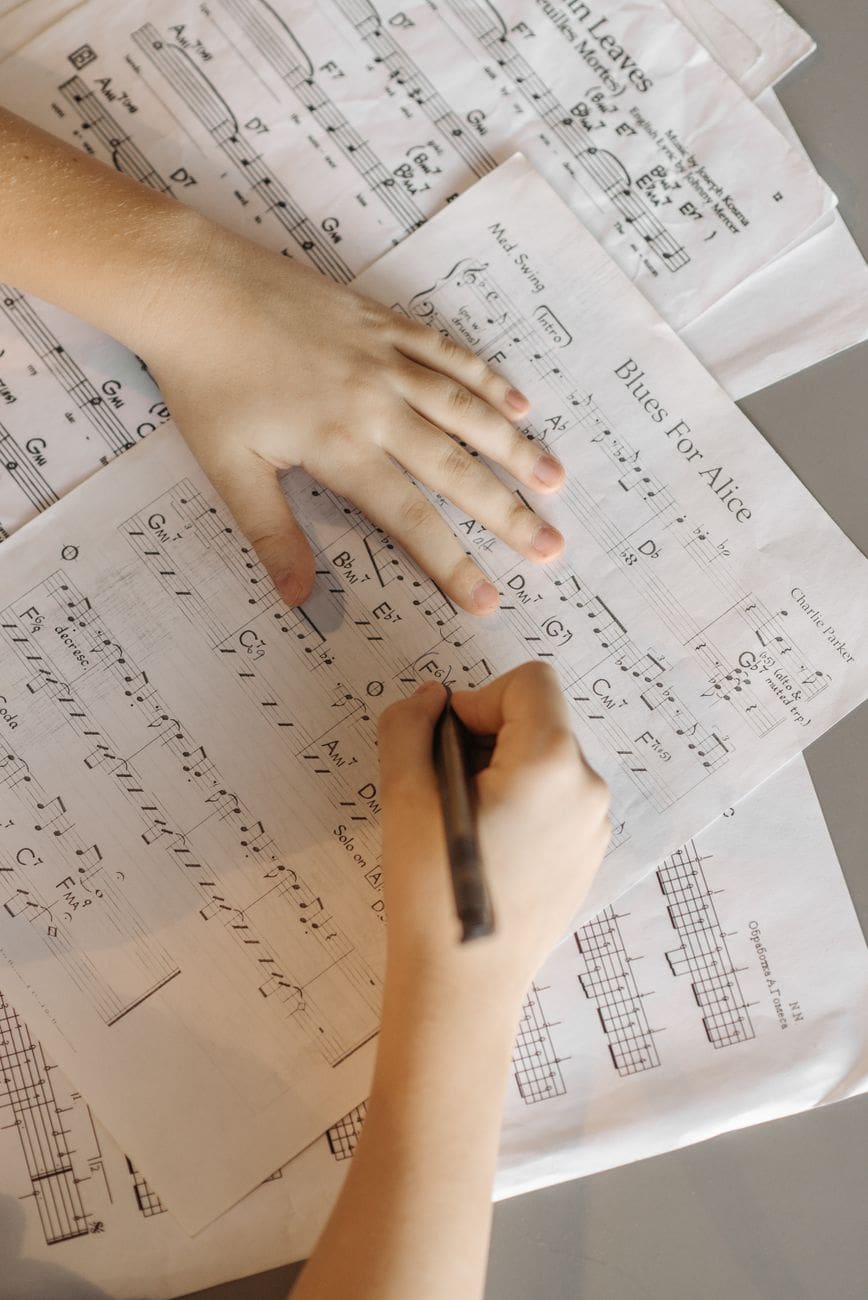
Trying to find chords for any song can feel easy at first. You type the title into a search engine, open the first result, and start playing. Then something sounds wrong. The verse may be close, but the chorus does not match. The key may be different from the recording. A slash chord may be missing. The bridge may have the wrong length. You may even discover that several websites show completely different progressions.
Online chord information is useful, but it varies widely in accuracy, arrangement, and readability. Some charts are based on live performances, acoustic covers, simplified beginner versions, or user-submitted guesses. Others may be technically correct but written in a key that does not match the version you want to play.
Finding accurate song chords requires more than clicking the top result. It involves identifying the correct version, checking the key, listening to the bass and melody, comparing sources, and organizing the final progression in a chart you can actually use. This guide provides a repeatable process for finding reliable chords and turning them into a clean song chord sheet.
Quick Answer
The most reliable way to find accurate chords is to identify the exact recording, confirm its key, compare multiple sources, listen to the bass, count measures, and test every section against the audio. Music theory helps verify whether unusual chords are intentional or transcription errors.
Key Takeaways
- Different live, studio, acoustic, and remastered versions may use different keys or arrangements.
- The bass line often reveals inversions and slash chords.
- Measure counts are as important as correct chord names.
- Save a verified master chart instead of repeatedly searching for new versions.
Identify the Exact Version of the Song
Many songs exist in more than one arrangement. The studio recording may differ from a live performance, radio edit, acoustic version, remaster, cover, or social media performance. Even the original artist may perform the song in a different key on tour.
Before searching, decide which version you want. Include the artist name, version, and release when necessary. A query such as “song title artist acoustic chords” is more precise than searching only the title.
Listen to the intro and ending of the version you selected. These sections often reveal whether you have the right arrangement. If the online chart begins with four measures but your recording begins with eight, you may be looking at a different version.
Check the Key Before Checking Every Chord
The fastest way to eliminate an incorrect chart is to compare the key. Find the note or chord that feels like home, especially at the end of the song. Many songs end on the tonic chord, although not all do.
If a chart says the song is in G but the recording resolves to A, the chart may be transposed, use a capo, or refer to another version. Guitar charts often list chord shapes rather than sounding chords. For example, a guitarist using a capo at the second fret may play G shapes while the music sounds in A.
Use an instrument to compare the recording with the chart. Play the first chord, the final chord, and the main chorus progression. If all three are consistently shifted by the same interval, the chart may be accurate but written in a different key. In that case, transpose it instead of discarding it.
Compare More Than One Source
Do not assume that popularity equals accuracy. Compare at least two or three chord sources when learning an unfamiliar song. Look for agreement in the main progression, section lengths, and unusual changes.
If every source shows the verse as C, G, Am, F, that progression is probably reliable. If one chart adds an Em before the chorus while the others do not, listen specifically for that measure. Differences can point you toward the exact place that requires closer attention.
User ratings may help, but they are not definitive. A highly rated simplified chart may be excellent for beginners while omitting passing chords from the recording. Decide whether your goal is an exact transcription, a playable accompaniment, or a simplified arrangement.
Listen to the Bass Line
The bass often provides the clearest clue to the harmony. Chords can share several notes, and melody notes may create extensions that make a simple chord sound more complex. The bass note helps identify the root or inversion.
Suppose the upper instruments sound like a C chord, but the bass plays E. The correct symbol may be C/E rather than C. If the bass descends from C to B to A while the harmony moves from C to G to Am, the middle chord may be G/B.
Use headphones and focus on the lowest notes. If the mix is dense, slow the recording without changing pitch. You do not need perfect pitch. Match one bass note at a time on your instrument, then test which chord fits above it.
Separate Chords From Melody Notes
A singer may hold a note that is not part of the basic triad. A guitar riff may add suspended tones. A keyboard pad may include a ninth. These notes can make the harmony sound different even when the underlying chord is simple.
Start by identifying the root and basic chord quality: major, minor, diminished, or dominant. Then listen for extensions such as sevenths, ninths, suspensions, or added tones.
For example, a melody note D over a C major chord could create a Cadd9 sound. However, the accompaniment may still be functioning as C major. Whether you write C or Cadd9 depends on how important that note is to the arrangement and whether the player needs the added detail.
A useful chord sheet should capture the musical identity without becoming unnecessarily complicated.
Count the Measures Carefully
A chart can contain the right chords and still be difficult to follow if the timing is wrong. Count the number of measures in each section. Listen for held chords, quick changes, extra bars, shortened measures, and transitional hits.
Write bar lines as you listen. Do not wait until the end of the section and rely on memory. If the verse has eight measures, confirm the location of each chord change. If one chord lasts two measures, show both measures or use a repeat symbol that cannot be misunderstood.
Pay special attention to the measure before a chorus or bridge. Arrangements often add a stop, a push, a two-beat transition, or a chord that appears only at the section change.
Determine Whether the Song Uses a Capo or Alternate Tuning
Guitar arrangements may use a capo to create open-string voicings in a higher key. A chart written with capo shapes can look completely different from the sounding harmony.
For example, a progression played with G, D, Em, C shapes at capo 2 sounds as A, E, F#m, D. Both descriptions are correct, but they serve different purposes. A guitarist may prefer the shape-based chart, while a pianist or bassist needs concert chords.
Alternate tunings can create similar confusion. A guitarist using DADGAD, drop D, or an open tuning may play shapes that do not correspond directly to standard-tuning chord names. If the recording has unusually resonant open strings or chord voicings that are difficult to reproduce, research the tuning used by the performer.
Ready to put this into practice?
Create and transpose your first chord sheet in Chord Sheet Pro
Use Music Theory to Test the Progression
Theory does not replace listening, but it helps you evaluate possibilities. In a major key, the most common diatonic chords are 1 major, 2 minor, 3 minor, 4 major, 5 major, 6 minor, and 7 diminished.
In C major, those chords are C, Dm, Em, F, G, Am, and Bdim. If an online chart contains an F#m chord in a simple C major song, that does not automatically make it wrong. It may be a borrowed chord, secondary dominant, chromatic passing chord, or modulation. However, the unusual chord deserves careful listening.
Recognizing common progressions also speeds up the process. If you hear a familiar 1, 5, 6m, 4 pattern, you can test the likely chords in the song’s key. The Nashville Number System is especially helpful because it lets you think in harmonic relationships rather than isolated letter names.
Watch for Borrowed Chords and Secondary Dominants
Many songs use chords outside the basic key. A major 3 chord may lead strongly to the 6 minor. A major 2 chord may lead to the 5. A minor 4 chord may add emotional color in a major key. A flat 7 major chord is common in rock, country, gospel, and mixolydian progressions.
These chords are often simplified or omitted in beginner charts. If the online version sounds close but lacks the movement or tension of the recording, listen for a secondary dominant or borrowed chord.
For example, in the key of C, E7 may lead to Am. The diatonic chord would normally be Em, but E7 contains G#, which pulls toward A. Replacing E7 with Em changes the character of the progression.
Decide How Accurate the Chart Needs to Be
“Accurate” can mean different things. A note-for-note transcription attempts to represent the original arrangement precisely. A functional chord chart captures the essential harmony and structure. A simplified chart removes difficult chords so a beginner can play the song.
Choose the level of detail that matches your purpose. For a solo acoustic performance, you may need chords that imply the bass line and melody. For a full band, a simpler harmonic chart may be enough because each instrument contributes part of the arrangement. For teaching, you may create both a beginner version and an advanced version.
The important thing is to label the chart honestly. Notes such as “simplified,” “acoustic arrangement,” or “live version” prevent confusion.
Test the Chords Against the Recording
Once you have a complete progression, play through the song from beginning to end. Do not stop every time you make a performance mistake. Focus on whether the chart stays aligned with the recording.
Mark any place where the harmony sounds weak, the section begins too early, or the ending does not match. Then loop those moments and correct them. A single missing measure can cause the entire chart to drift out of sync.
After the chart matches the recording, play it without the audio. This reveals whether the form and repeat instructions are clear. If you get lost without the recording, improve the labels or layout.
Create a Clean Final Chord Sheet
Once you have found the accurate chords, move them into a clean chart. Include the title, artist, key, tempo if known, and any capo or tuning notes. Divide the song into sections and use consistent measure spacing.
Avoid keeping ten browser tabs open or relying on screenshots from different sources. Consolidate the final arrangement into one version that reflects what you actually plan to play.
Chord Sheet Pro lets you create, edit, duplicate, transpose, and organize song chord sheets in one place. You can preserve the verified version, make a second chart for another key, or keep separate arrangements for acoustic and full-band performances.
Transpose Without Introducing New Errors
After verifying a song, you may need to move it to a singer’s preferred key. Manual transposition can create mistakes, especially with slash chords and extensions.
Every part of the chord must move by the same interval. If Cmaj7 becomes Dmaj7, then G/B becomes A/C#, Am7 becomes Bm7, and Fadd9 becomes Gadd9. Do not change chord quality unless the arrangement itself changes.
Using Chord Sheet Pro, you can transpose the full chart instantly. This allows you to test several keys during rehearsal without rewriting the progression or losing track of the original.
Save Notes About the Arrangement
Accuracy includes more than chord names. Add notes about stops, builds, repeated choruses, solo lengths, and endings. If the band decides to cut the second verse or extend the bridge, update the chart.
Keep notes short and actionable. “Down first half” is more useful than a paragraph describing the mood. “Stop beat 4” is clearer than “pause near the end.” Good notes reduce discussion during rehearsal and help musicians remember decisions weeks later.
Build a Reliable Song Library
The fastest way to find accurate chords in the future is to preserve the work you have already completed. Store verified charts in an organized library. Use consistent titles and collection names. Separate alternate keys or arrangements when necessary.
Over time, your personal library becomes more valuable than a random search result because every chart reflects a version you have tested. You know the key, form, and arrangement are correct for your needs.
Visit Chord Sheet Pro to build a clean collection of song chord sheets you can search, update, and use anywhere. Instead of finding the same song from scratch before every rehearsal, keep one dependable chart ready to play.
A Repeatable Process for Any Song
To find chords for any song, begin with the exact recording. Confirm the key. Compare several sources. Listen to the bass. Separate melody notes from the underlying harmony. Count measures. Check for capo use, alternate tuning, borrowed chords, and arrangement differences. Then test the complete chart from start to finish.
This process may take longer than copying the first result, but it saves time later. Accurate charts lead to smoother practice, faster rehearsals, and more confident performances. Once the work is complete, organize the chart so you never have to solve the same song twice.
Keep every chart ready for practice, rehearsal, and performance.
Start your organized song library in Chord Sheet Pro
Frequently Asked Questions
Why do chord websites show different chords for the same song?
Sources may be based on different recordings, capo positions, simplified arrangements, or user transcriptions. Some versions also confuse melody notes with actual harmony.
How can you confirm the key of a song?
Listen for the tonal home note, check the final resolution, compare the most common chords, and test a major or minor scale against the recording.
Should a chord chart match every chord on the recording?
It depends on the purpose. A beginner chart may simplify passing chords, while a professional arrangement may need inversions, extensions, and exact rhythmic changes.
What is the fastest way to verify a chord progression?
Loop one section, play along at reduced speed if needed, listen closely to the bass movement, and confirm both the chord quality and the exact beat of each change.
Leave a Reply